
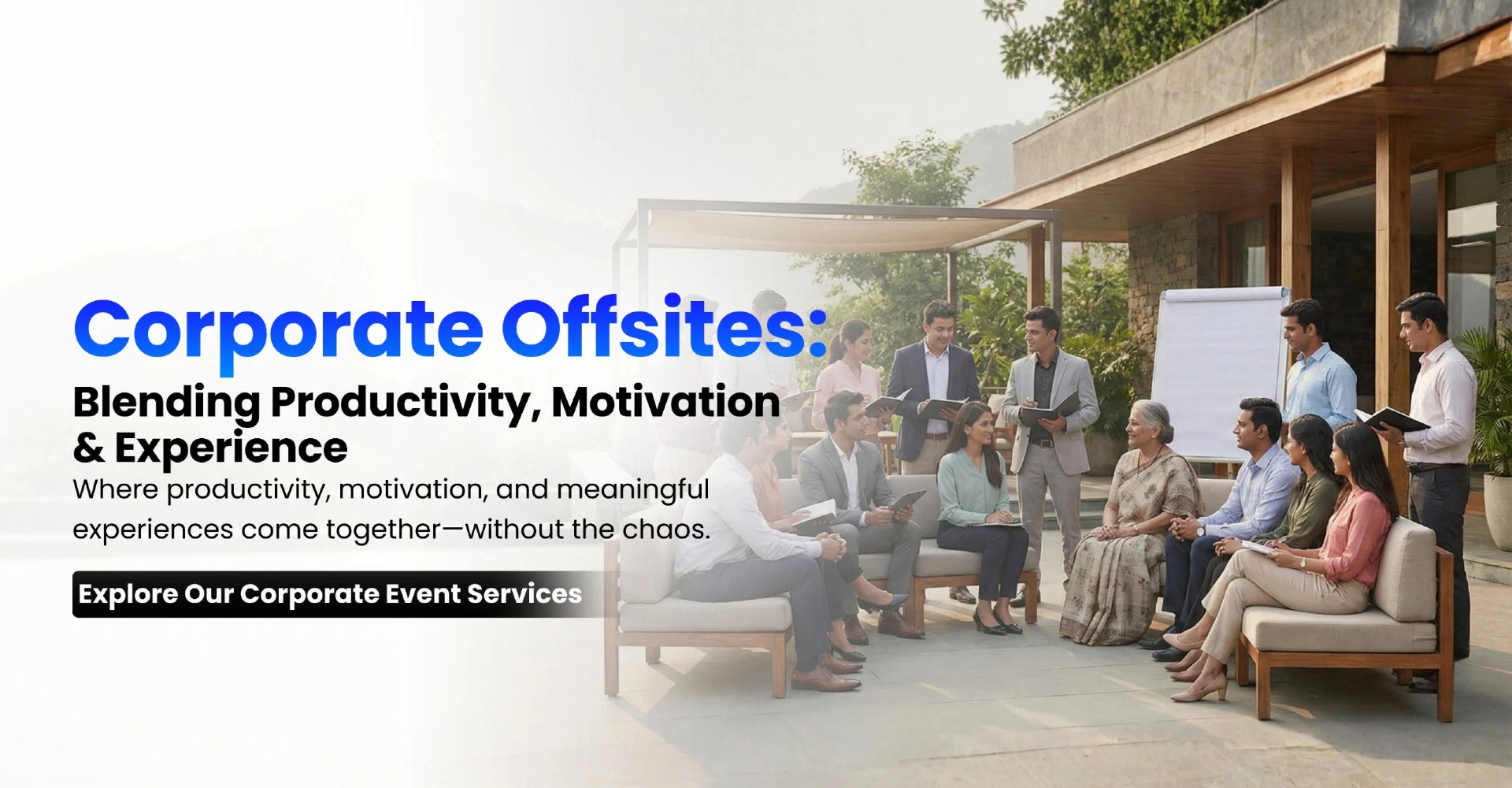
Corporate Offsites: Blending Productivity, Motivation & Experience
Anyone who has planned a corporate offsite knows this truth: it’s never just an offsite.
The initial point is a simple brief, “We need to take the team out for alignment and motivation.”
What follows is typically a whirlwind of confusion, a lack of time to meet your deadlines, high expectations and changes at the last minute. Nevertheless, if handled correctly, a corporate offsite can be turned into one of the most impactful moments of the year for a company.
Today, corporate offsites are not anymore focused on glamorous resorts or tightly-packed schedules. The main goal is to bring together the people with a shared purpose—balancing work discussions, human connection and worthwhile experiences.
With remote work, hybrid teams, and constant digital communication, teams talk more, but connect less.
Corporate offsites create space for:
- Real conversations without screens
- Teams to understand the “why” behind their work
- Leadership to listen, not just speak
- Employees to feel seen, not just managed
A thoughtful corporate offsite renews the team’s spirit and gets everyone on the same page again—something that no Zoom call can really substitute.
Most of the work is totally invisible from the front view of a well-organized offsite.
It is a long checklist shortlisting venues, negotiating the budget, coordinating travel, allocating rooms, planning sessions, preparing backup power, checking the weather, and following up with vendors. And then, there are people: different personalities, different expectations, different levels of comfort.
At this point, professional corporate event management is the greatest difference that it can make. Not only in the handling of the logistics but also in the comprehension of the people’s experience of the event.
One common mistake companies make is turning offsites into day-long meetings in a new location. People attend—but mentally, they switch off.
Productive offsites are designed differently:
- Short, focused strategy sessions
- Interactive workshops instead of long presentations
- Breaks that actually allow people to recharge
- Clear outcomes, not just discussions
When sessions are thoughtfully spaced and well-facilitated, teams leave with clarity instead of exhaustion.
Motivation doesn’t come from motivational speeches alone. It comes from moments that feel genuine.
Recognition sessions, leadership interactions, casual conversations over coffee—these moments matter. Employees remember when their efforts are acknowledged and when leaders are accessible.
Corporate offsites offer the rare opportunity to say, “You matter to this organization”—without putting it on a slide.
Ask employees what they remember from an offsite, and they won’t talk about the presentations. They’ll talk about:
- The team challenge that made everyone laugh
- The evening where departments actually mixed
- The quiet moment that sparked a real conversation
Experience design is the main factor that differentiates an offsite from just being another event. In fact, a lot of the details such as a themed evening, using the local culture, or even a simple but well-organized team activity—these are the details that determine the emotions of the people towards the event.
A perfect place is the one that helps to achieve the purpose of the offsite. Also, it should be convenient, pleasant, and free from any kind of noise or distractions. Thus, the best venues are those where teams can work during the day and rest without any worry in the evening.
Moreover, seasoned corporate offsite planners do not stop at the visual aspect—they consider the flow, timing, safety, accessibility, and backup plans as well. The main reason is that when logistics go wrong, the experience deteriorates.
A successful corporate offsite doesn’t end when everyone checks out.
You’ll see it in:
- Better communication back at work
- Teams aligning faster on priorities
- Improved morale and energy
- Feedback that goes beyond “nice venue”
The real ROI shows up in the weeks that follow.
In-house teams often juggle offsite planning on top of their regular roles. It’s stressful, takes a lot of time, and is risky.
Such troubles are cured by professional corporate event management companies, which bring structure, creativity, and calm. They foresee issues before they get there and therefore, the event goes naturally—internal teams can concentrate on participation, not solving problems.
Basically, a corporate offsite is about people.
It is about making a place where one can think, connect, reflect, and move forward together. When productivity, motivation, and experience are in perfect harmony, offsites cease to be an obligation and become real.
And that’s when they truly work.