
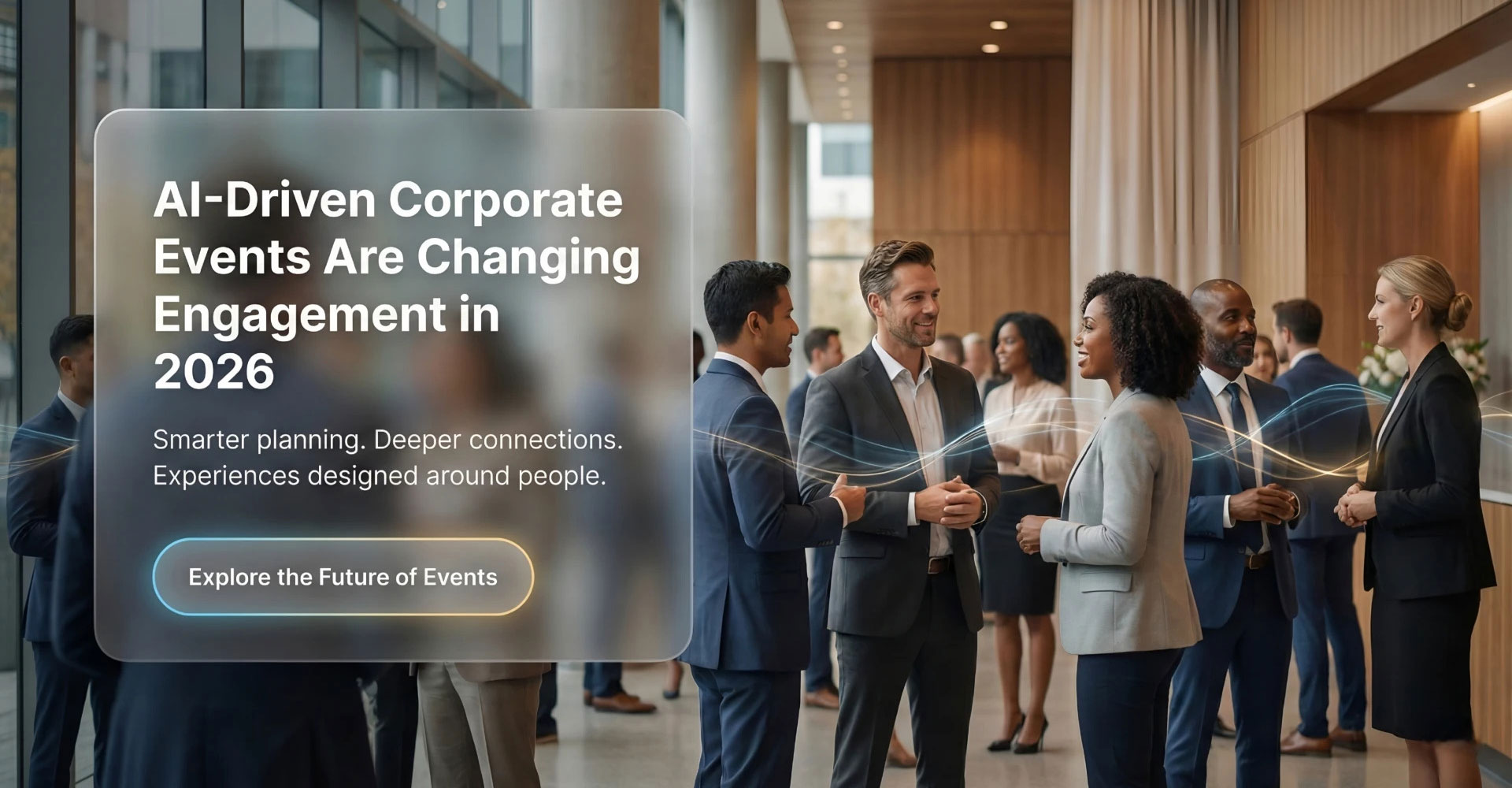
How AI-Driven Corporate Events Are Changing the Way People Actually Engage in 2026
There was a time when corporate events all felt the same. You arrived, skimmed an agenda, attended sessions that were “fine,” exchanged business cards, and later received a feedback form you probably never filled.
By 2026, that approach doesn’t hold attention anymore. People want events to respect their time and speak directly to their needs.
That shift is exactly where AI has stepped in—not loudly, not as a selling point, but as something working quietly in the background.
Corporate events today are expected to show real value. Leadership teams aren’t just asking how many people attended—they want to know whether the right conversations happened and whether the time invested was worth it.
AI helps remove assumptions from planning. Instead of relying on instinct, organisers now work with actual behaviour patterns, engagement signals, and participation data. The result is events that feel more intentional and far less generic.
Networking used to depend heavily on chance. You spoke to whoever happened to be nearby, often without knowing whether the conversation would lead anywhere.
AI-based attendee matchmaking quietly improves this. By analysing roles, interests, and objectives, it helps people connect with others they are more likely to benefit from meeting. Conversations start with relevance, not small talk, and follow-ups become more meaningful.
Attendance drop-offs, overcrowded sessions, and underused spaces were once accepted as part of event planning.
AI has reduced that uncertainty. By studying past data and real-time behaviour, it helps predict turnout, session popularity, and ideal scheduling. This leads to smoother flow, better use of resources, and fewer last-minute changes—especially important for leadership offsites and multi-city events.
By 2026, people expect instant answers. Searching through emails or standing at help desks feels outdated.
AI-powered event assistants now handle common questions—about sessions, venues, speakers, and updates. Attendees get what they need immediately, while organisers are freed from constant interruptions. The experience feels more polished without being intrusive.
Traditional post-event feedback often comes too late to be useful.
AI changes that by tracking engagement in real time. Organisers can see which sessions are working, where attention drops, and what topics resonate. This allows for on-the-spot improvements and far more useful insights for future events.
Across conferences, leadership meets, and client events, AI is already shaping experiences. Teams are connecting before sessions begin, large events are managing scale more smoothly, and agendas are being shaped around actual audience behaviour.
The common outcome is simple: people leave feeling their time was respected.
At YDRA Events, AI is treated as a support tool—not a headline feature.
Technology is used to improve planning, personalise experiences, and understand engagement, while the focus remains firmly on human connection. Storytelling, flow, and execution come first. AI simply helps those elements work better together.
AI doesn’t replace people. It removes friction so people can connect more naturally.
When done well, events don’t feel “tech-driven.” They feel thoughtful, relevant, and well-designed—and that’s what people remember.
- Are AI-driven events only for large organisations?
No. Many AI tools scale well for mid-sized companies and focused leadership or client events. - Do AI-powered events feel impersonal?
When used thoughtfully, they actually feel more personal and relevant. - Is AI expensive to implement for events?
Often, it reduces costs by improving planning accuracy and minimising inefficiencies. - Can AI be used in offline events?
Yes. Many tools are designed specifically for physical event environments. - How does YDRA Events approach AI integration?
AI is used to support the experience, never to overshadow it